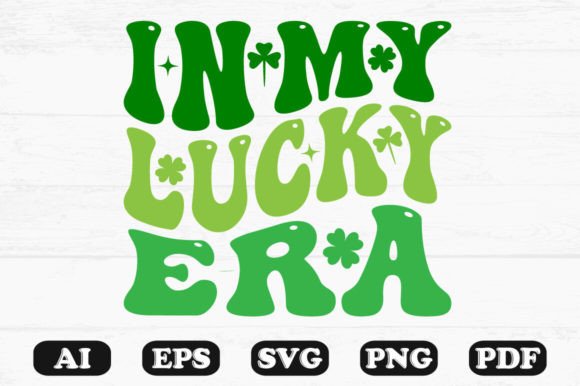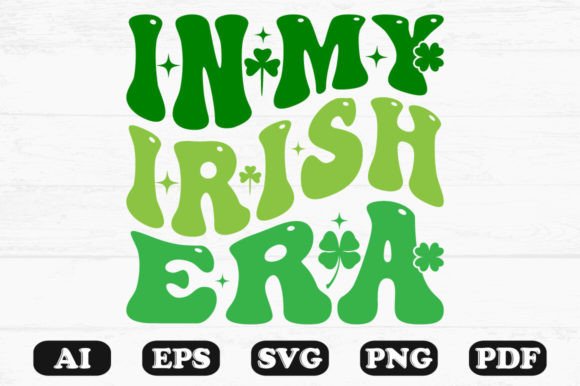
In My Irish Era Retro Wavy SVG T-shirt
First Impressions: A Nod to Nostalgia, Not Just Noise
Opening In My Irish Era Retro Wavy SVG T-shirt feels like flipping through a well-loved 70s record sleeve—warm, intentional, and quietly confident. It’s not shouting “Irish!” with shamrocks and leprechauns; it leans into mood over motif. The wavy baseline gives rhythm, the letterforms have gentle weight and spacing, and the overall silhouette breathes comfortably on a design canvas. As an embroidery designer who’s stitched everything from baby onesies to boutique aprons, I immediately saw its potential—not as a standalone novelty, but as a subtle signature for handmade products that value personality without pretense.
Where This Design Earns Its Keep: Real Projects, Real Fabric
Last week, I prepped a small-batch run of linen tote bags for a local café’s St. Patrick’s Day pop-up. I tested In My Irish Era Retro Wavy SVG T-shirt as a centered chest embroidery—no appliqué, just clean satin-stitched letters on medium-weight natural fabric. It held up beautifully: the curves translated smoothly into stitch, the letter height allowed legibility at 3.5”, and the rhythm of the wave kept the line from feeling static. Customers responded warmly—not because it screamed “Irish,” but because it felt *human*. That’s the quiet strength of this design: it supports storytelling rather than replacing it.
I’ve also used it on unisex sweatshirts (cotton-poly blend), tea towels (woven cotton), and even a set of nursery pillow covers (quilting cotton). In each case, the wavy baseline helped the text flow *with* the garment’s drape—not against it. For Etsy sellers or small shop owners building cohesive collections, In My Irish Era Retro Wavy SVG T-shirt works as a unifying typography element across apparel, home goods, and personalized gifts—especially when paired with simple icons or monochrome palettes.
Where to Pause—and Test First
This isn’t a one-size-fits-all embroidery file. Its charm lives in its fluidity, but that same fluidity asks for thoughtful execution. On stretchy fabrics like jersey tees or baby knits, I recommend stabilizing generously—light cutaway under the hoop, plus tear-away on top—to prevent waviness from exaggerating into distortion. On dark fabrics, test thread contrast early: a soft sage or oatmeal tone reads more vintage than stark white, which can flatten the retro feel.
Small hoop sizes (under 4”) will require scaling down—but watch those inner curves. At under 2.75”, the lower swell of the “y” and tail of the “r” risk becoming dense fill-stitch blobs instead of graceful arcs. Likewise, curved surfaces like caps or structured totes demand careful hooping and possibly repositioning the wave’s apex to follow the contour. And while it’s labeled a “T-shirt design,” don’t assume it’s optimized for ultra-thin blanks—always run a test stitch on scrap first, especially if you’re using it for baby embroidery or lightweight holiday gifts meant for frequent washing.
Design Integrity Meets Customer Trust
When your customers see a handmade product, they’re reading cues: craftsmanship, care, consistency. In My Irish Era Retro Wavy SVG T-shirt reinforces that—if executed well. Its balanced spacing avoids the cramped look of low-res text SVGs, and its moderate stroke weight prevents fragile satin stitches from breaking during wear or laundering. That translates directly to perceived value: a customer receiving a sweatshirt with this embroidery doesn’t think “cheap digital file,” but “thoughtfully made.” For craft business owners listing on Etsy or selling at markets, that distinction builds repeat buyers and word-of-mouth referrals.
It also plays well in branding—think boutique kitchen towels, custom aprons for Irish bakeries, or personalized graduation gifts for literature majors with Celtic roots. Because it’s typography-first, not clip-art-heavy, it scales gracefully across digital embroidery files, printable mockups, and even simplified vinyl cuts for hybrid projects.
Practical Notes Every Embroiderer Should Run Through
- Test before committing: Stitch on scrap fabric matching your final product’s weight and stretch.
- Check thread color contrast on both light and dark backgrounds—retro doesn’t mean low visibility.
- Review stitch density in the curved sections—dense fills can pucker thin fabrics; consider reducing density slightly if needed.
- Confirm hoop size compatibility before digitizing or sending to your machine—some versions may extend beyond standard 5x7” boundaries.
- Inspect small details at actual stitch-out size—especially the connection points between letters and the wave baseline.
- Try black-and-white mockups to assess visual balance without color distraction.
- Use appropriate stabilizer: medium cutaway for knits, tear-away for stable wovens, and optional topping for textured fabrics like terry cloth.
- Verify licensing—this is a Graphics product intended for Crafts use, but commercial embroidery rights (e.g., selling finished embroidered items) must be confirmed with the seller before large-scale production.
A Design That Fits—Not Just Fills—The Space
In My Irish Era Retro Wavy SVG T-shirt won’t dominate a project—it’ll complement it. That’s rare in today’s oversaturated landscape of bold quotes and busy motifs. Whether you’re stitching a single personalized gift or building a seasonal collection for your small shop, this design earns its place by working *with* your process, not against it. It respects fabric, honors stitch integrity, and leaves room for your voice as the maker. In the end, the best embroidery designs aren’t just stitched—they’re felt. And this one? It lands gently, memorably, and true.